 info@nbcoir.com
 +94
+94 
What Is Coco Coir? Benefits, Uses & Guide
Introduction
If you’ve spent any time gardening recently, you’ve probably heard people talk about coco coir. It’s showing up in potting mixes, hydroponic systems, and seed trays everywhere. But what exactly is it—and why is it so popular?
In simple terms, coco coir is a natural fiber made from coconut husks. It’s used as a soil amendment and growing medium because of its excellent water retention, aeration, and sustainability. Gardeners love it for seed starting, container gardening, and even hydroponics.
Let’s break down everything you need to know about coco coir—what it is, how it’s made, its benefits, and how to use coco coir for plants successfully.
What Is Coco Coir?
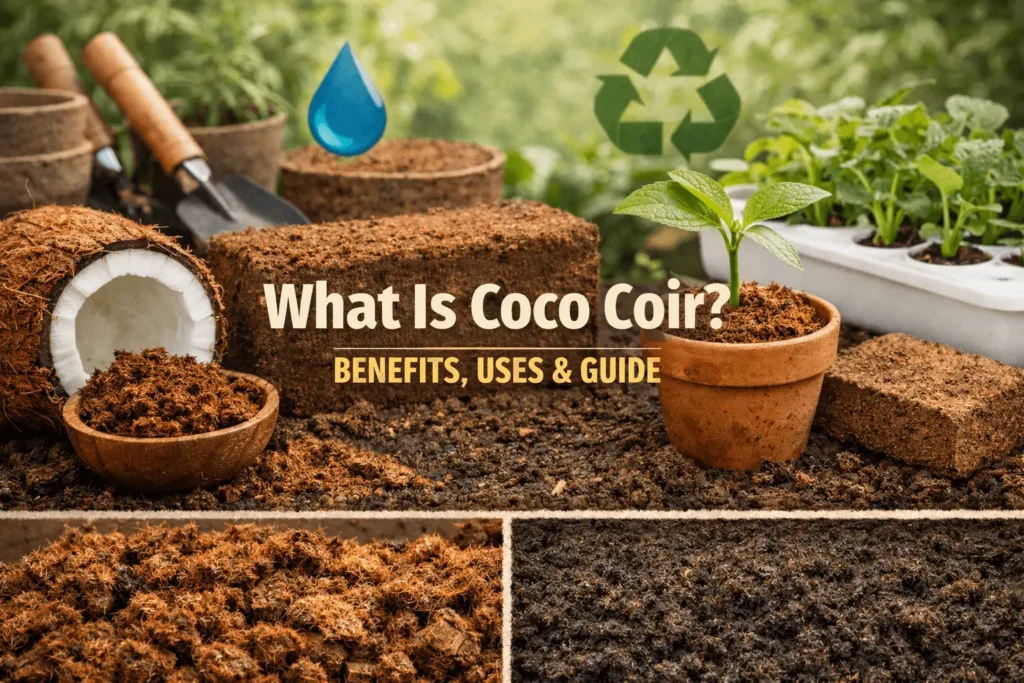
Coco coir is a fibrous material extracted from the outer husk of coconuts. After coconuts are harvested for food and oil, the husks are processed into usable fiber.
There are three main types:
- Coco fiber – Long strands used in ropes and mats
- Coco peat (coir pith) – Fine, soil-like material ideal for gardening
- Coco chips – Chunky pieces that improve aeration
When people ask, “what is coco coir?”, they usually mean coco peat—the fine, brown material that looks similar to peat moss but comes from coconuts instead of bogs.
Because it’s lightweight and holds moisture well, coco coir has become a popular growing medium for:
- Seed starting
- Container gardening
- Raised beds
- Hydroponics
- Indoor plants
Unlike traditional soil, coco coir is sterile and free of most pathogens, making it beginner-friendly and reliable.
How Coco Coir Is Made
The production process of coco coir is surprisingly simple and eco-conscious.
Here’s how it works:
- Harvesting – Mature coconuts are collected.
- Husk Removal – The outer husk is separated from the shell.
- Retting – Husks are soaked in water to soften the fibers.
- Fiber Separation – Long fibers and pith are separated.
- Drying & Processing – The material is washed, dried, and compressed into bricks or blocks.
Most coco coir products are sold in compact bricks. Once you add water, they expand dramatically—often 5–7 times their original size.
This compressed format makes coco coir easy to transport, store, and use when needed.
Benefits of Coco Coir
Gardeners choose coco coir for many reasons. Let’s look at the biggest coco coir benefits.
1. Excellent Water Retention
Coco coir can hold up to 8–10 times its weight in water. This means:
- Plants stay hydrated longer
- Less frequent watering
- Reduced drought stress
Yet, despite its water retention, it still drains well—preventing root rot.
2. Superior Aeration
The fibrous structure creates air pockets. Roots need oxygen, and coco coir provides it.
Better airflow means:
- Stronger root systems
- Healthier plant growth
- Reduced compaction over time
3. Neutral pH
Coco coir typically has a pH between 5.5 and 6.8, which is ideal for most plants. This makes it versatile for vegetables, flowers, and houseplants.
4. Disease Resistance
Because coco coir is processed and sterilized, it contains fewer pathogens and weed seeds than garden soil.
5. Long-Lasting Structure
Unlike peat moss, which breaks down quickly, coco coir maintains its structure for years.
These coco coir benefits make it a dependable soil amendment for both beginners and experienced gardeners.
Coco Coir Uses in Gardening
There are many coco coir uses, especially in modern gardening systems.
Seed Starting
Coco coir is perfect for seed starting because it:
- Retains moisture consistently
- Drains excess water
- Encourages root development
Seeds germinate well in coco coir for plants because the texture supports delicate roots.
Container Gardening
Mix coco coir with compost and perlite to create a lightweight potting mix. It prevents soil from becoming too compact in pots.
Raised Beds
When blended with native soil, coco coir improves:
- Soil structure
- Water retention
- Aeration
This is especially helpful in sandy or clay-heavy soils.
Hydroponics
In hydroponics, coco coir acts as a growing medium that anchors roots while nutrients are delivered through water.
It’s widely used in:
- Drip irrigation systems
- Grow bags
- Indoor grow setups
Because coco coir is inert (low in nutrients), it gives growers full control over fertilization.
Coco Coir vs Peat Moss
One of the most common comparisons is coco coir vs peat moss. Let’s break it down clearly.
| Feature | Coco Coir | Peat Moss |
|---|---|---|
| Source | Coconut husks | Sphagnum bogs |
| Sustainability | Renewable byproduct | Slow-renewing |
| pH Level | Near neutral | Acidic |
| Water Retention | High | Very high |
| Environmental Impact | Lower | Higher (bog damage) |
Peat moss forms over thousands of years in wetlands. Harvesting it damages fragile ecosystems.
Coco coir, on the other hand, is a byproduct of the coconut industry. Since coconuts are harvested regularly, coco coir is considered more sustainable.
However, coco coir may require buffering to reduce natural salts, especially for sensitive plants.
Overall, when comparing coco coir vs peat moss, many gardeners choose coco coir for environmental reasons.
How to Use Coco Coir for Plants
If you’re wondering how to use coco coir properly, follow these simple steps.
Step 1: Rehydrate
Most coco coir comes in dry bricks.
- Place the brick in a large container
- Add warm water gradually
- Let it expand fully
- Fluff with your hands
Step 2: Mix or Use Alone
You can use coco coir in several ways:
As a soil amendment:
- Mix 30–50% coco coir with garden soil
For potting mix:
- 40% coco coir
- 30% compost
- 20% perlite
- 10% worm castings
For hydroponics:
- Use pure coco coir with nutrient solution
Step 3: Add Nutrients
Coco coir contains minimal nutrients. Always add:
- Compost
- Organic fertilizer
- Liquid hydroponic nutrients
This ensures healthy plant growth.
Step 4: Monitor Moisture
Even though coco coir holds water well, don’t overwater. It should feel moist but not soggy.
When used correctly, coco coir for plants creates an ideal root environment.
Is Coco Coir Sustainable?
Sustainability is one reason coco coir is growing in popularity.
Here’s why:
- It’s a renewable byproduct
- It reduces waste from coconut processing
- It’s biodegradable
- It helps reduce peat harvesting
However, there are some considerations:
- Transportation from tropical regions increases carbon footprint
- Some products require heavy washing to remove salts
Still, compared to peat moss, coco coir is widely regarded as a more environmentally responsible option.
Frequently Asked Questions
1. What is coco coir used for?
Coco coir is used as a growing medium, soil amendment, and hydroponic substrate. It improves water retention, aeration, and root development.
2. Is coco coir better than soil?
Coco coir isn’t necessarily better than soil—but it enhances soil structure. In containers and hydroponics, it often performs better due to improved drainage and aeration.
3. Does coco coir have nutrients?
Coco coir contains very few nutrients. You must add compost or fertilizer for healthy plant growth.
4. Can you reuse coco coir?
Yes. You can reuse coco coir after removing old roots and refreshing nutrients. It holds its structure well for multiple growing cycles.
5. Is coco coir good for indoor plants?
Absolutely. Coco coir for plants indoors works well because it improves drainage and reduces fungus gnat issues compared to heavy soils.
Conclusion
So, what is coco coir? It’s a versatile, sustainable growing medium made from coconut husks that improves water retention, aeration, and root health.
From seed starting to hydroponics, coco coir uses are expanding every year. When comparing coco coir vs peat moss, many gardeners prefer coco coir for its sustainability and neutral pH.
If you’re looking to improve your soil, boost plant growth, or try hydroponics, coco coir is an excellent place to start.
Ready to experiment? Grab a small brick, rehydrate it, and see the difference in your garden.
Your plants might just thank you. 🌱