 info@nbcoir.com
 +94
Why Sri Lankan Coco Peat is Preferred Worldwide
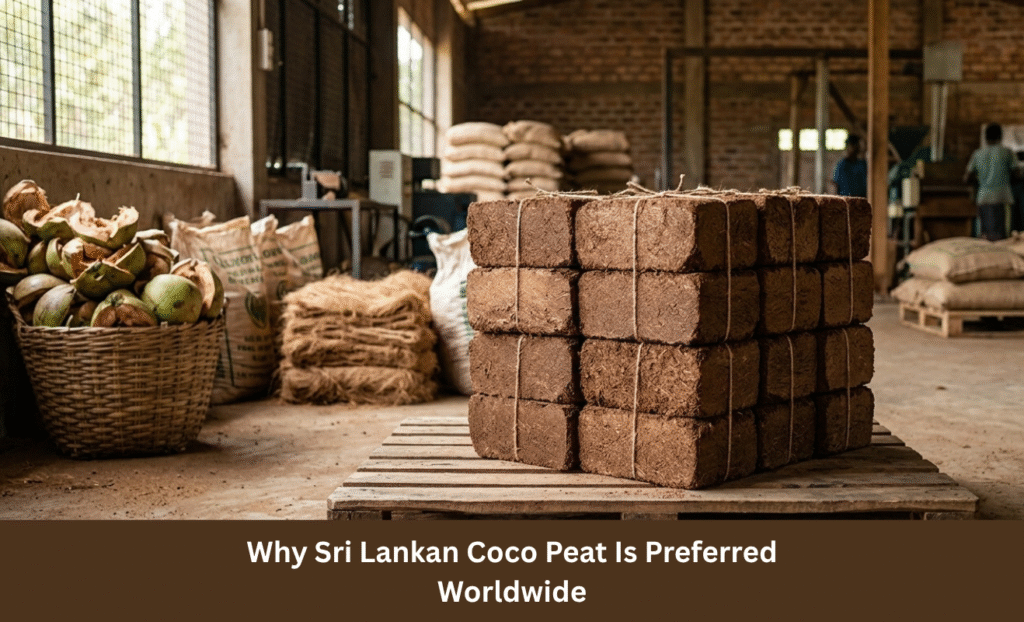
Sri Lankan coco peat has built a strong reputation among commercial growers, greenhouse operators and importers around the world. It’s not just because the country produces a lot of it. The combination of raw material quality, processing standards and consistent supply is what makes the difference.
Here’s a clear look at why many buyers prefer coco peat from Sri Lanka.
Quality of the raw material
Sri Lanka has a long history of coconut cultivation. The climate and soil conditions produce husks that are well-suited for coir processing. When the husks are properly selected and handled, the resulting coco peat tends to have a good structure — not too fine, not too coarse — and responds well to washing and buffering.
Consistent raw material is the foundation. When the starting husks are more uniform, the final product is easier to process to a reliable EC level and particle size. This is one reason Sri Lankan material is often described as more predictable from batch to batch.
Processing standards
Good coco peat is not just compressed husk. The processing steps matter a lot:
- Proper separation of peat, chips and fibre
- Screening to control particle size
- Thorough washing to reduce salts
- Buffering when required (to lower potassium and sodium)
- Controlled drying and compression
Reputable Sri Lankan manufacturers have refined these steps over many years. The better facilities pay close attention to washing time, water quality, and final EC testing. This reduces the common problems growers face with high salt levels or uneven expansion.
Sri Lanka has a long history of coconut cultivation. The climate and soil conditions produce husks that are well-suited for coir processing. When the husks are properly selected and handled, the resulting coco peat tends to have a good structure — not too fine, not too coarse — and responds well to washing and buffering.
Consistent raw material is the foundation. When the starting husks are more uniform, the final product is easier to process to a reliable EC level and particle size. This is one reason Sri Lankan material is often described as more predictable from batch to batch.
Certifications and quality systems
Many professional buyers look for suppliers who follow recognised quality systems. ISO and GMP-related standards are increasingly expected, especially for export markets.
These systems help ensure:
- Consistent production processes
- Traceability of material
- Better hygiene and handling
- Documented quality checks
While a certificate alone does not guarantee perfect product, it shows the manufacturer has put systems in place to control quality. For importers and large growers, this reduces risk when ordering containers.
Why buyers keep coming back
Commercial growers and distributors usually care about a few practical things:
- Does the material expand consistently?
- Is the EC stable and suitable for the crop?
- Can the supplier deliver the same specification repeatedly?
- Is the documentation clear for customs and quality checks?
Sri Lankan suppliers who focus on these points tend to build long-term relationships. The country’s experience in coir processing, combined with established export channels, makes it easier for buyers to source reliable material at scale.
Not all Sri Lankan coco peat is the same
It’s important to be realistic. Quality still varies between manufacturers. Some focus on low-cost, lightly processed material. Others invest in proper washing, buffering and quality control.
The preference for Sri Lankan coco peat is strongest when the buyer works with a manufacturer that:
- Controls the process carefully
- Tests EC and structure regularly
- Can supply consistent batches
- Provides clear specifications and documentation
Final thoughts
Sri Lankan coco peat is preferred by many growers and importers because of the combination of good raw material, established processing knowledge, and the ability to meet commercial quality expectations. When the material is properly washed, buffered and consistent, it performs reliably in greenhouses, hydroponic systems and nurseries.
As with any growing medium, the key is choosing a supplier who prioritises process control and product consistency rather than just the lowest price. That is what turns a good raw material into a trusted product in international markets.