 info@nbcoir.com
 +94

Reusing Coco Coir Substrate – Can You Recycle It Successfully?
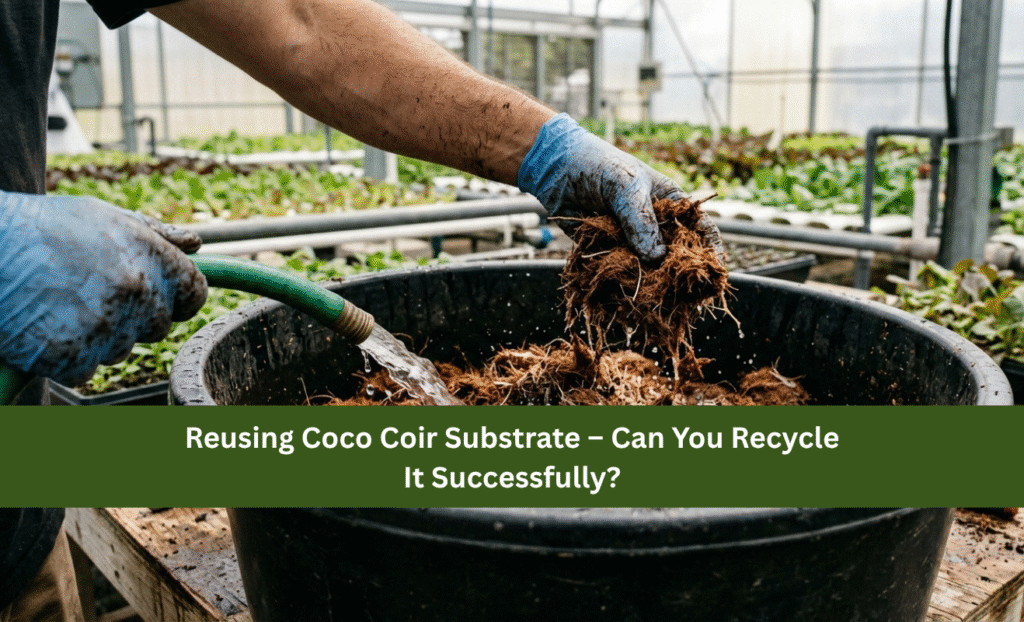
How many cycles, sterilization methods, and when to replace
Reusing coco coir is one of the smartest ways commercial and home growers can cut costs while reducing waste. High-quality coco coir can be successfully reused for 2–3 crop cycles when properly cleaned, flushed, and prepared. In this guide we cover exactly how many times you can reuse it, the best sterilization methods, and the clear signs it’s time to replace the substrate.
The short answer is yes — you can recycle coco coir successfully for more than one crop. Most growers get solid results for two to three cycles when they handle it properly. Some stretch it further by refreshing the mix, but the physical structure eventually breaks down and performance drops. Here’s a clear look at how to do it right, what methods work, and the clear signs it’s time to replace the media.
Why Coco Coir Handles Reuse Better Than Many Alternatives
Unlike peat or many soil mixes that collapse quickly, coco’s fibrous structure holds up longer. The lignin in the fibres resists rapid decomposition. That means the medium can keep providing air space and water-holding capacity across multiple grows — if salts are flushed, old roots are removed, and pathogens are managed.
Reuse saves money and reduces waste. At the end of its useful life it still has value as a soil amendment or compost ingredient. Starting with a high-quality, well-buffered product (the kind manufactured to consistent standards) makes the process more reliable from the first cycle onward.
How Many Times Can You Reuse Coco Coir?
- Typical range: 2–3 full crop cycles for most growers.
- With extra care: Some achieve a fourth cycle by mixing in 10–20% fresh coir each time and carefully monitoring structure and EC.
- Factors that shorten lifespan: Heavy salt accumulation, root disease in previous crops, fine particle breakdown that reduces aeration, and poor flushing between runs.
After three solid seasons the fibres usually start to fragment. Drainage slows, the medium packs more tightly, and plants respond with weaker root systems or inconsistent moisture. At that point replacement is usually the smarter choice.
Step-by-Step Guide to Reusing Coco Coir Successfully
1. Remove plant material
Pull out the main root ball and as much leftover root as practical. Enzymes can help break down remaining organic matter if you want a cleaner result.
2. Flush thoroughly
Rinse with clean water (preferably low-EC or RO water) until the runoff EC is low — ideally under 1.0 mS/cm. This removes accumulated fertiliser salts that would otherwise lock out nutrients or burn young roots. Multiple rinses are better than one heavy soak.
3. Optional sterilisation / pasteurisation
If the previous crop was healthy, a good flush is often enough. If there was any sign of root disease, mould, or pests, treat the media.
4. Re-buffer
Coco naturally holds onto potassium and sodium. Soak or water with a calcium-magnesium solution to restore proper cation balance. This step is especially important after several cycles.
5. Refresh and check structure
Mix in a portion of fresh coir or a little perlite if the old material feels fine or compacted. Make sure it still drains freely and feels springy rather than muddy.
6. Store properly if not planting immediately
Let it dry somewhat and keep it in a clean, covered container so it doesn’t pick up contaminants.
Best Sterilization Methods for Reusing Coco Coir
These are the approaches growers use most often:
- Hydrogen peroxide — Simple and effective. A dilute solution (commonly around 2 ml of 35% H₂O₂ per litre of water, or adjusted strength of 3% product) soaked through the media, followed by a thorough rinse. Leaves little residue.
- Hot water or boiling water — Pour boiling water over the coir, stir, and let it cool. Or soak in hot water above roughly 65–70°C for a period. Straightforward for smaller batches.
- Oven pasteurisation — Spread moist coir in a shallow layer and heat to about 80°C (176–180°F) for 30–45 minutes. Good for limited quantities.
- Steam — Suspend the media above boiling water or use a proper steamer setup for 30–45 minutes. One of the cleaner heat methods.
- Solarisation — On a hot sunny day, spread moist coir thinly under clear plastic and aim for an internal temperature of at least 65°C for 30+ minutes.
- Bleach solution — Dilute household bleach (roughly 4 teaspoons per gallon of water), soak, then rinse extremely well until no chlorine smell remains. Effective but requires careful rinsing.
Heat methods and peroxide are generally preferred over harsh chemicals when you want to preserve as much of the media’s character as possible. Full sterilisation kills beneficial microbes as well as pathogens, so many growers lean toward pasteurisation-level treatments when disease pressure is moderate.
Important: If the previous crop had serious root pathogens (Pythium, Fusarium, etc.), it is usually safer to discard the coir for growing use and compost it instead. Pathogens can persist and the risk outweighs the savings.
When to Replace Rather Than Reuse
Replace the media when you notice any of these:
- Structure has broken down — it stays waterlogged, feels compacted, or has turned into a fine, peat-like mass with poor aeration.
- Significant root disease or persistent pest problems in the last crop.
- EC remains high even after thorough flushing.
- Visible mould, unpleasant odours, or a grey, matted appearance.
- You are starting sensitive seedlings or cuttings (fresh media is safer).
- Yields or plant vigour have declined across cycles despite good nutrition and environment.
At end of life, used coco makes an excellent addition to outdoor beds or compost piles. It improves soil structure and water retention without the drawbacks of synthetic materials.
A Few Extra Tips for Success
- Always measure runoff EC and pH after flushing and before planting the next crop.
- Avoid reusing heavily for the most disease-sensitive plants or very young starts.
- Quality matters from the start. Well-processed, properly buffered coco with a good fibre-to-pith balance holds its structure longer and responds better to cleaning and reconditioning.
- Keep records of how many cycles each batch has seen so you can plan replacements ahead of time.
Reusing coco coir is one of the simplest ways to lower growing costs and reduce waste without sacrificing plant performance — provided you treat the media with the same care you give the plants. Two or three solid cycles are realistic for most growers. Beyond that, watch the structure closely and be ready to refresh or replace.
When you eventually need fresh media, starting with consistent, export-quality coco makes the whole process smoother from the first use through every reuse cycle.