 info@nbcoir.com
 +94

Why Coco Peat Causes Yellow Leaves (and How to Fix It) | Calcium & Magnesium Lockout
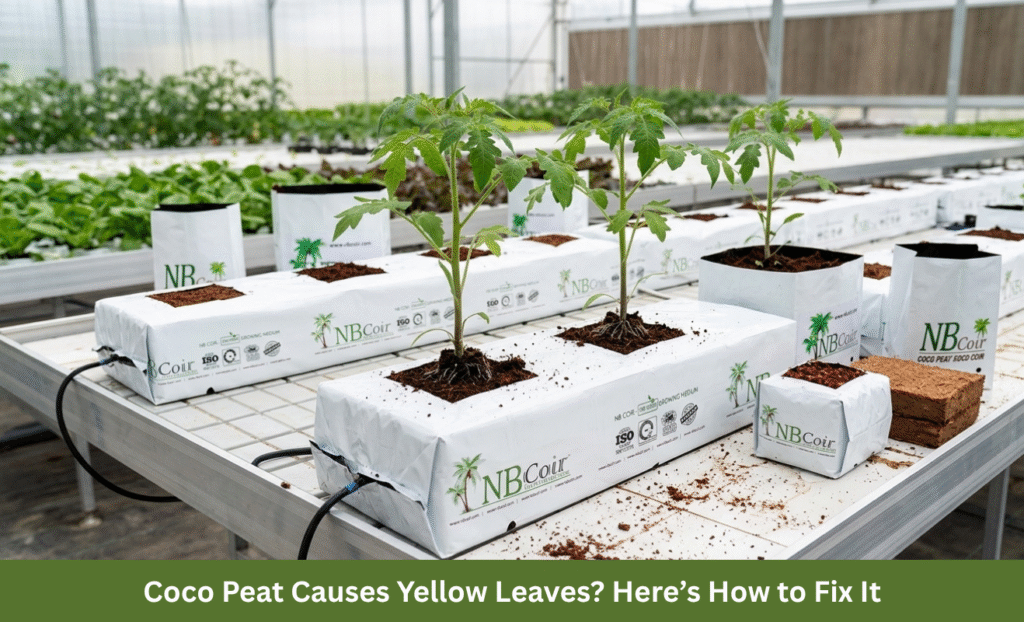
Coco peat causes yellow leaves more often than most growers expect. The plants may look healthy at the beginning, then the new growth starts turning yellow, sometimes with brown edges or tips. Many people assume the plant simply needs more nitrogen, but in coco the real cause is usually related to calcium and magnesium availability, high EC, or poor buffering.
This guide explains why it happens, how to tell what’s going wrong, and what actually fixes it.
Why Coco Peat Causes Yellow Leaves
1. Calcium and Magnesium deficiency (most common cause)
Coco peat has a natural tendency to hold onto calcium and magnesium while releasing potassium. If the coco was not properly buffered, or if your nutrient solution doesn’t supply enough extra Ca and Mg, the plant cannot take them up properly.
Typical signs:
- Yellowing between the veins on newer leaves
- Brown spots or crispy leaf edges
- Slow or stunted growth even though you are feeding regularly
This is especially common when using soft water or RO water.
2. High EC or salt build-up
If the coco started with a high EC, or if you have been feeding strong without enough runoff, salts accumulate in the root zone. This makes it harder for the roots to absorb water and nutrients. Yellowing is often one of the first signs.
3. Poor quality or lightly washed coco
Some coco is only given a quick wash and still labelled as ready to use. High potassium and sodium levels in poorly processed material compete with calcium and magnesium, creating deficiencies even when your nutrient bottle looks balanced.
4. Overwatering and low oxygen
When coco stays too wet for long periods, roots get less oxygen. This reduces their ability to take up nutrients and can show up as yellow leaves, particularly on the lower part of the plant.
5. pH out of range
If the root zone pH drifts too high or too low, nutrient availability drops. Calcium and magnesium are especially sensitive to pH problems.
How to diagnose the problem
Before changing everything, check a few simple things:
- Look at which leaves are affected. New leaves usually point to calcium/magnesium issues. Older leaves can indicate nitrogen or general stress.
- Measure the runoff EC and pH. If runoff EC is much higher than your input EC, salts are building up.
- Think about the coco you used. Was it buffered? Did you add Cal-Mag from the start?
- Check your watering frequency. Is the medium staying wet for long periods?
These checks usually reveal the cause quickly.
How to fix yellow leaves in coco
Step 1: Flush the medium
Give a thorough irrigation with plain water or a very light nutrient solution until you get significant runoff. This helps remove excess salts. After flushing, check the runoff EC again.
Step 2: Add Calcium and Magnesium
Most coco growers need to supplement Cal-Mag, especially in the early weeks. Use a reliable Cal-Mag product and follow the recommended rate. Some nutrient lines already include higher calcium and magnesium for coco use — those often work better.
Step 3: Reduce nutrient strength temporarily
If the plants are stressed, lower the EC for a few days while they recover. Once new growth looks healthy, gradually bring the strength back up.
Step 4: Adjust watering
Allow the medium to dry back slightly between irrigations. Constant saturation reduces oxygen and makes nutrient uptake harder.
Step 5: Correct pH if needed
Aim for a root zone pH around 5.8–6.2. If runoff pH is consistently outside this range, adjust your input solution.
How to prevent it next time
- Start with properly washed and buffered coco whenever possible.
- Add Cal-Mag from the beginning, especially with soft or RO water.
- Monitor runoff EC and pH at least once a week.
- Avoid keeping the medium constantly wet.
- Choose consistent quality material. Large variation between batches is a common source of problems.
- If you buy in bulk, ask the supplier about the buffering process and typical starting EC.
Crop-specific notes
- Tomatoes and peppers: These crops are quite sensitive to calcium issues. Blossom end rot is often linked to the same problem that causes yellow leaves.
- Strawberries: They prefer stable conditions and can show deficiencies quickly if the coco is not well buffered.
- Leafy greens: Faster growing crops show yellowing earlier, so regular monitoring helps catch problems sooner.
When yellow leaves are more serious
If the yellowing continues after flushing, adding Cal-Mag, and correcting watering, check for root problems. Unhealthy roots cannot take up nutrients properly no matter how good the solution is. In severe cases you may need to inspect the root zone directly.
Final thoughts
Yellow leaves in coco peat are rarely just a simple nitrogen shortage. In most cases the cause is calcium and magnesium availability, salt build-up, or a combination of both. Once the root zone conditions are corrected, new growth usually turns green again within one to two weeks.
The best long-term solution is to start with good quality buffered coco and maintain a consistent feeding and watering routine. This prevents most of the common deficiency problems before they appear.
If you are running a larger greenhouse or commercial setup and seeing this issue across many plants, it is worth reviewing both the coco quality and the nutrient program together rather than treating them as separate problems.