 info@nbcoir.com
 +94
How to Choose a Reliable Coco Peat Supplier for Export
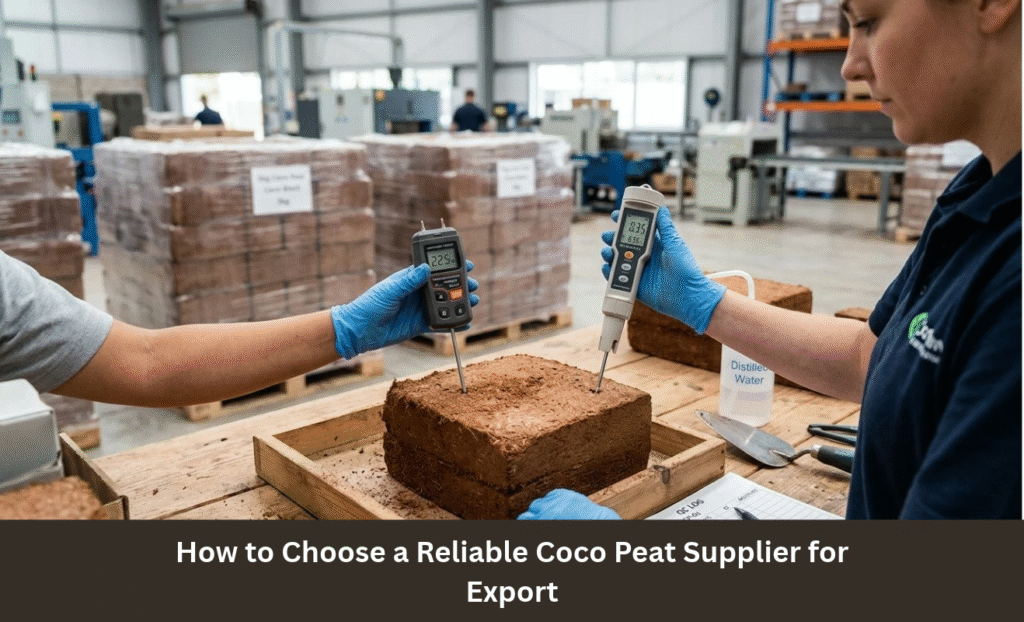
Finding a dependable coco peat supplier for export is not just about getting the lowest price. One bad container can damage your reputation with growers, delay projects, and cost far more than the savings you thought you made. Whether you are an importer, distributor, or greenhouse operator, the right supplier protects your business long-term.
Here’s a practical guide on what actually matters when selecting a coco peat exporter.
Key Quality Checks When Selecting a Coco Peat Supplier for Export
Never rely on a generic “high quality” claim. Ask for clear, measurable specifications and recent lab reports.
Key parameters professional buyers check:
- Electrical Conductivity (EC): For washed/low-EC coco peat used in hydroponics and professional growing, look for < 0.5 mS/cm (ideally tested by 1:1.5 or 1:5 method — always ask which method they use). High-EC material is fine for some soil amendment uses but unsuitable for sensitive crops.
- pH range: Ideally 5.5 – 6.8.
- Moisture content: Preferably 10–18% at packing. Higher moisture increases mould risk during long sea voyages.
- Expansion volume: A good 5 kg block should expand to roughly 60–75 litres when properly hydrated.
- Fibre and impurity levels: Low fibre content (usually under 5%) and minimal sand/dust for better consistency.
- Buffering: Ask whether the material is only washed or also buffered with calcium (important for reducing potassium and sodium interference).
A reliable supplier will provide a Certificate of Analysis (COA) for the actual batch, not just a generic brochure. Third-party lab reports add extra confidence.
Why Consistency Matters in a Coco Peat Supplier for Export
One good sample means very little if the next three containers perform differently.
Look for suppliers who can demonstrate:
- Batch or lot numbering on both packaging and documents
- Controlled washing, aging, and drying processes
- Stable particle size distribution
- Sufficient monthly production capacity so they are not constantly rushing or switching raw material sources
Sri Lankan manufacturers with long track records (especially those operating for 15–20+ years) often have an advantage here because they control the full process from husk selection to final compression.
Packaging Standards for a Reliable Coco Peat Supplier for Export
Poor packaging is one of the most common reasons coco peat arrives damaged or mouldy.
Standard and preferred options include:
- 5 kg compressed blocks (most common for bulk export)
- 650 g briquettes
- Grow bags (ready-to-use)
- Larger bales or jumbo bags for certain markets
Important points to confirm:
- Moisture-barrier packaging or UV-treated wrapping
- Proper palletisation and stretch wrapping
- Clear labelling with product specs, batch number, and net weight
- Ability to handle both palletised and non-palletised loading depending on your preference and destination regulations
Shipping and Logistics Tips for Choosing a Coco Peat Supplier for Export
Even perfect product fails if paperwork or logistics are weak.
A serious exporter should be comfortable discussing:
- Preferred loading ports and typical lead times
- Full set of export documents (Commercial Invoice, Packing List, Bill of Lading, Certificate of Origin, Phytosanitary Certificate, COA)
- Experience with your destination country’s import requirements
- Moisture control measures inside the container (desiccants when needed)
- Flexible Incoterms (FOB, CIF, CFR, etc.)
Ask how many containers they ship per month and whether they have dedicated logistics support. Delays or missing documents create expensive problems at the destination port.
Red Flags to Watch For
- Unwillingness to share recent batch-specific lab reports
- Extremely low prices that seem too good to be true
- Vague answers about production capacity or washing process
- No clear lot traceability
- Poor communication or slow response times
- Reluctance to provide samples or arrange third-party inspection
Why Experience and Transparency Matter
Companies that have been manufacturing and exporting for many years usually have refined their processes, built stable raw material supply, and learned how to handle different market requirements. They are more likely to deliver consistent quality and solve problems when they arise.
NB Coir, for example, has been producing coco peat and coir products in Sri Lanka since 2006. They work with custom specifications, offer OEM, and supply commercial growers and importers across multiple countries. Their focus on controlled processing and export documentation makes them the type of supplier many buyers look for when consistency and reliability are non-negotiable.
Final Advice
Start with clear specifications, request recent COAs and samples, check their ability to maintain consistency, and evaluate their packaging and documentation support. Price is important, but it should never be the only deciding factor.
A reliable coco peat supplier becomes a long-term partner. The right choice saves money, protects your customers’ crops, and reduces operational headaches.
If you are currently evaluating suppliers or need coco peat with specific EC, packaging, or OEM requirements, feel free to reach out and discuss your needs in detail.