 info@nbcoir.com
 +94

Coco Peat for Different Crops: Tomatoes, Peppers, Strawberries and Leafy Greens
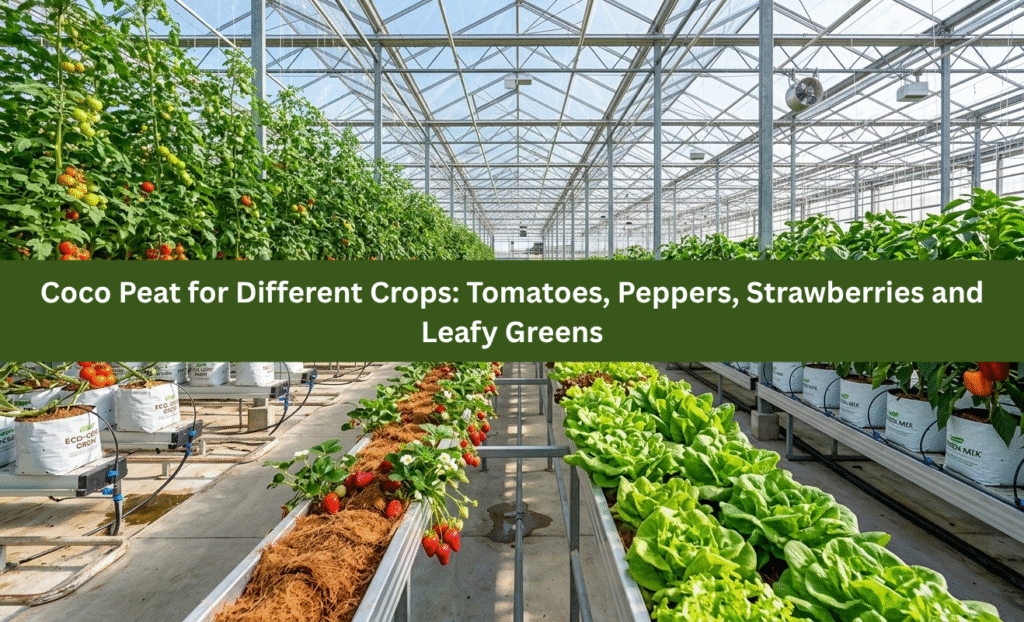
Coco peat works for many crops, but the best results come when you match the material and management to what each plant actually needs. Water-holding, aeration, EC level and irrigation style all play a role. Here’s a practical look at how to use coco peat for four common crops.
Tomatoes
Coco peat for tomatoes is one of the most common uses of this growing medium in greenhouses and hydroponic systems. It also works well for peppers, strawberries and leafy greens when the material and irrigation are matched to each crop.
What works well
- A mix with some coco chips usually performs better than pure fine peat. The extra air space helps prevent waterlogging as the plants get larger.
- Low to medium EC coco is preferred, especially at the start.
- Consistent moisture is important, but the medium should not stay saturated.
Practical tips
- Start with a slightly lower nutrient strength while plants establish.
- Calcium is critical. Many tomato growers add extra Cal-Mag to reduce the risk of blossom end rot.
- As plants grow and fruit load increases, irrigation frequency usually needs to rise.
- Monitor runoff EC regularly. Tomatoes can be sensitive to salt build-up.
Common issues
- Blossom end rot (linked to calcium uptake)
- Overwatering in the early stages
- Uneven growth when bags dry out unevenly
Peppers (Bell / Capsicum)
Peppers have similar needs to tomatoes but are often a bit more sensitive to wet conditions.
What works well
- A coarser mix (peat + chips) generally gives better results than very fine material.
- Good drainage is important. Peppers do not like constantly wet roots.
- Stable EC and pH help maintain steady growth.
Practical tips
- Allow a slight dry-back between irrigations.
- Keep an eye on calcium and magnesium levels.
- Avoid large swings in moisture — peppers respond better to consistent conditions.
- In cooler conditions, be careful not to overwater.
Common issues
- Slow growth if the medium stays too wet
- Calcium-related problems on fruit
- Salt accumulation if runoff is insufficient
Strawberries
Strawberries are quite particular about root-zone conditions and often show problems quickly if the coco is not well prepared.
What works well
- Low EC, properly buffered coco is strongly preferred.
- A mix that holds moisture but still has good air space works best.
- Consistency between bags or slabs is important because strawberries are often grown at high density.
Practical tips
- Start with well-buffered material to reduce calcium and magnesium issues.
- Keep the medium evenly moist. Strawberries do not like big wet-dry cycles.
- Watch runoff EC closely — they are sensitive to rising salt levels.
- Good quality water makes a noticeable difference.
Common issues
- Tip burn or leaf edge problems (often related to calcium)
- Root problems if drainage is poor
- Uneven growth when EC drifts too high
Leafy Greens (Lettuce, Herbs, etc.)
Leafy greens grow quickly and usually prefer a lighter, more open medium.
What works well
- Finer coco peat can work, but a mix with some air space still helps.
- Lower EC levels are generally better, especially for lettuce.
- Fast drainage and good oxygen around the roots support quick growth.
Practical tips
- Use milder nutrient solutions compared to fruiting crops.
- Keep the medium moist but not waterlogged.
- Because the crop cycle is short, starting with clean, low-EC coco gives more reliable results.
- Watch for tip burn, which can appear quickly if conditions are off.
Common issues
- Tip burn (calcium related)
- Soft growth if the medium stays too wet
- Faster salt build-up in warm conditions
General recommendations across crops
- Always start with washed and preferably buffered coco when growing commercial crops.
- Match the peat-to-chip ratio to the crop’s preference for moisture vs aeration.
- Track runoff EC and pH — it tells you more than the input numbers alone.
- Adjust irrigation as plants grow. What works in week 2 is rarely ideal in week 8.
- Consistency of the material matters. Large differences between batches make crop management harder.
Final thoughts
Coco peat is flexible enough to grow tomatoes, peppers, strawberries and leafy greens successfully. The key is not treating all crops the same. Adjusting the structure of the medium, the starting EC, and the irrigation style to each crop’s needs makes a clear difference in plant health and yield.
When the basics are right — good quality buffered coco, sensible nutrition, and careful watering — most of the common problems become much easier to manage.