 info@nbcoir.com
 +94

Buffered vs Unbuffered Coco Peat: What’s the Real Difference?
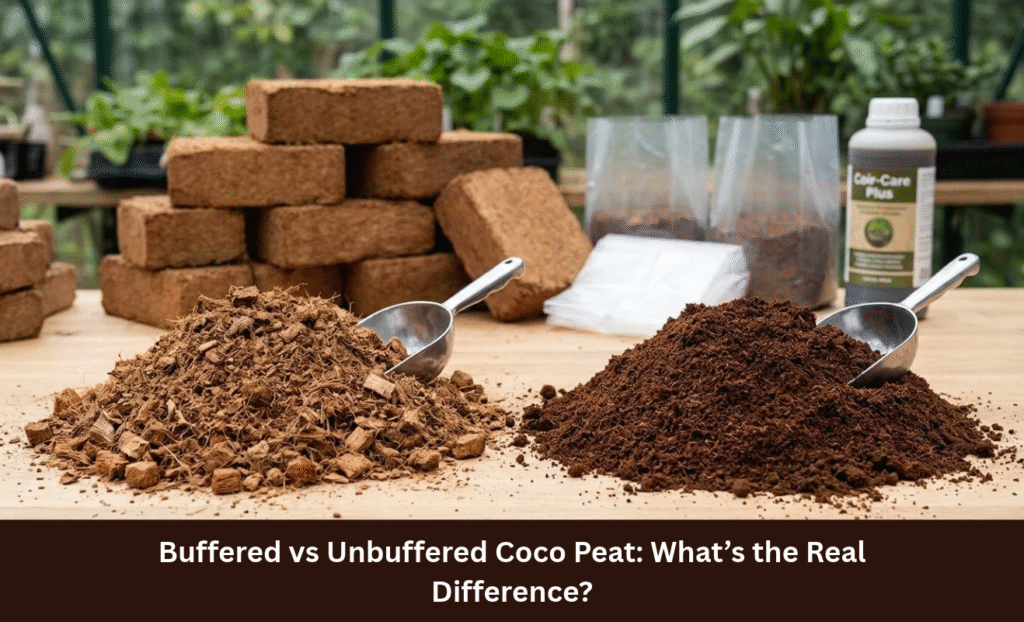
Buffered vs unbuffered coco peat is one of the most important decisions growers make when choosing a coco coir substrate. While both types start from the same coconut husk, the way they are processed creates a big difference in how plants take up calcium and magnesium.
The difference often comes down to one important process: buffering.
Here’s a clear explanation of buffered vs unbuffered coco peat, why it matters, and which one you should choose.
What Is Unbuffered Coco Peat?
Unbuffered coco peat (sometimes called washed or low-EC coco) has been rinsed with water to remove most of the soluble salts. This brings the electrical conductivity (EC) down to a safer level.
However, the cation exchange sites on the coco particles are still largely occupied by potassium and sodium. When you start feeding your plants, these sites prefer calcium and magnesium. As a result:
- Calcium and magnesium from your nutrient solution get locked up by the coco
- Potassium and sodium are released into the root zone
- Plants can show calcium or magnesium deficiency symptoms even though you are supplying enough
This is why many growers experience tip burn, interveinal chlorosis, or blossom end rot in the early weeks when using unbuffered coco.
What Is Buffered Coco Peat?
Buffered coco peat goes one step further. After washing, it is treated with a calcium-rich solution (usually calcium nitrate, sometimes with magnesium). During this process:
- Calcium (and magnesium) ions replace the potassium and sodium on the exchange sites
- The displaced potassium and sodium are washed away
- The coco becomes chemically more stable
Once the exchange sites are occupied by calcium, the medium is much less likely to steal Ca and Mg from your feed. This gives you more predictable nutrient availability right from the first irrigation.
Buffered vs Unbuffered Coco Peat: Key Differences
When to Choose Buffered vs Unbuffered Coco Peat
Buffered coco is the safer and more convenient choice in most professional situations:
- Hydroponic systems and fertigated greenhouses
- Grow bags and slabs for tomatoes, cucumbers, peppers, and strawberries
- Recirculating systems where nutrient balance is critical
- Growers who want fewer variables and more predictable results
It reduces the risk of early nutrient imbalances and makes crop management simpler.
When Can Unbuffered Coco Work?
Unbuffered (well-washed) coco can still perform well if:
- You pre-treat it yourself with a Cal-Mag solution before planting
- You run higher calcium and magnesium levels in the early weeks
- You are blending it into a soil-based mix that already contains calcium sources
- You are an experienced grower who monitors runoff closely
For beginners or commercial operations that value consistency, buffered material is usually the better option.
Important Note About Cal-Mag
Even with buffered coco, most growers still add some calcium and magnesium in their nutrient program. Buffering mainly prevents the medium from aggressively locking up these nutrients at the start. Plants still need a steady supply throughout the crop.
Quality Still Comes First
Whether you choose buffered or unbuffered, the quality of washing and processing matters a lot. Poorly washed coco (high EC) will cause problems no matter what. Look for:
- Low and consistent EC
- Clean material with minimal dust
- Clear information about whether it is buffered or not
- Reliable batch-to-batch consistency
Manufacturers like NB Coir in Sri Lanka focus on proper washing and can supply coco peat processed to different specifications, including options suitable for professional hydroponic and greenhouse use. Having a supplier who understands the difference between simple washing and true buffering helps avoid costly surprises later.
Final Thoughts
The real difference between buffered and unbuffered coco peat is about control and predictability. Unbuffered coco can work, but it demands more attention and adjustment in the early stages. Buffered coco removes a major variable so your nutrient program performs the way you designed it.
If you want fewer deficiency issues and more consistent results especially in hydroponics or commercial grow bags buffered coco peat is usually the smarter choice.