 info@nbcoir.com
 +94

Coco Coir Grow Bags vs Plastic Pots: Cost & Yield Comparison
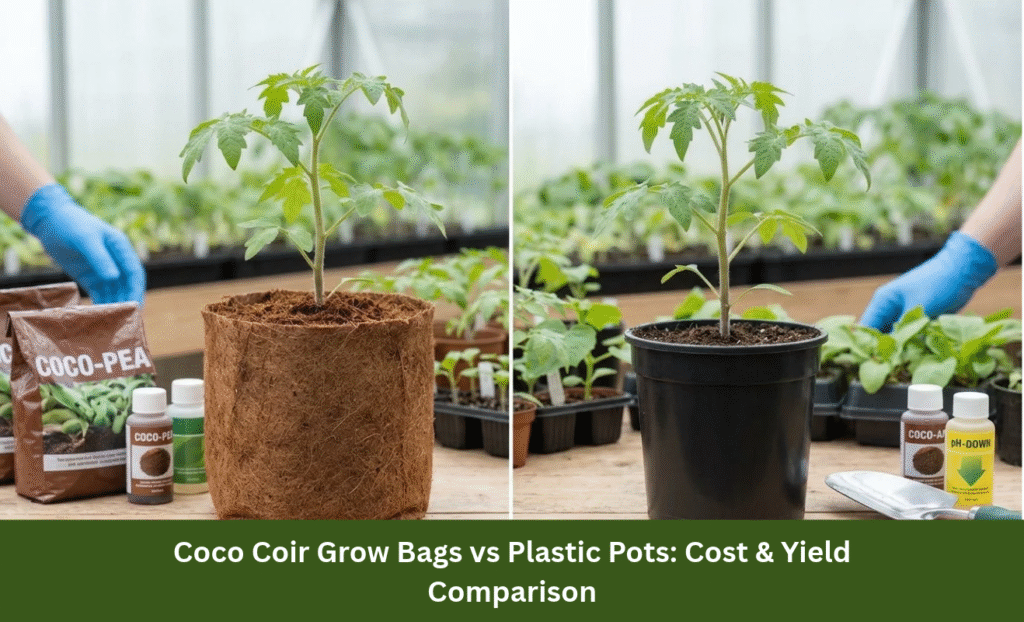
Coco coir grow bags vs plastic pots is a common decision for greenhouse and commercial growers. Both systems can produce strong yields, but they differ in cost, labour, root zone performance, and long-term efficiency.
This article compares coco coir grow bags and plastic pots across the most important factors so you can make a practical decision for your operation.
1.Coco Coir Grow Bags vs Plastic Pots: Cost Comparison
Plastic Pots
- Lower upfront cost per plant in many cases
- Pots can often be reused for several seasons if cleaned and sterilized properly
- Additional costs include the growing medium (coco peat, soil mix, or other substrate) and filling labour
Coco Coir Grow Bags
- Higher cost per unit than empty plastic pots
- However, they come pre-filled with coco coir, which removes the need to buy and fill substrate separately
- Usually designed for single-season use (although some growers reuse them with proper treatment)
Verdict on Cost:
Plastic pots may look cheaper at first, but when you add substrate, labour for filling, and cleaning costs, the difference often narrows. Grow bags offer a ready-to-use solution that can reduce labour at planting time.
2. Labour and Ease of Use
Plastic Pots
- Require filling with substrate
- Heavier to move when filled
- Need more handling during setup and end-of-season cleaning
Coco Coir Grow Bags
- Arrive compressed or ready to hydrate
- Lightweight and easy to place in rows
- Faster to install, especially in large greenhouses
- No filling or mixing required
Verdict on Labour:
Grow bags generally win on speed and reduced labour, particularly in commercial settings where planting windows are tight.
3. Root Zone Performance and Plant Health
Plastic Pots
- Root zone depends heavily on the quality of the substrate used
- Can develop salt buildup if drainage is poor
- Root circling is more common in hard-sided pots
Coco Coir Grow Bags
- Provide a consistent, well-aerated root environment when using quality coco
- Excellent water-holding capacity with good drainage
- Roots tend to explore the entire volume more evenly
- Lower risk of waterlogging when irrigation is managed correctly
Many growers report stronger root systems and more uniform plant growth in well-managed grow bags compared to pots filled with inconsistent mixes.
4. Yield Potential
Yield depends more on crop management, genetics, climate control, and nutrition than on the container alone. However, the growing system influences consistency and ease of control.
- Grow bags often deliver more uniform results in commercial hydroponic or fertigated systems because the root zone is more standardized.
- Plastic pots can match or exceed grow bag yields when filled with a high-quality substrate and managed carefully, but results can vary more between plants.
In large-scale tomato, cucumber, pepper, and strawberry production, coco grow bags are widely used because they support high yields with relatively predictable performance.
5. Water and Nutrient Management
Plastic Pots
- Watering needs vary with pot size and substrate
- Higher risk of dry pockets or overwatering if not monitored closely
Coco Coir Grow Bags
- Designed for drip irrigation
- Provide consistent moisture distribution when properly hydrated
- Easier to standardize irrigation and fertigation across large areas
Grow bags generally make it easier to maintain a stable root zone EC and moisture level in commercial setups.
6. Reusability and Sustainability
- Plastic pots can be reused multiple times if properly cleaned and disinfected.
- Coco grow bags are typically single-season products, although the coco material itself is organic and can sometimes be reused or composted.
From a waste perspective, pots create plastic waste over time, while grow bags generate organic waste that is easier to handle in many regions.
Which Option Should You Choose?
Choose Plastic Pots if:
- You already have a reliable substrate mix
- You want to reuse containers for several seasons
- You grow a wide variety of crops in smaller batches
- Labour for filling and cleaning is not a major constraint
Choose Coco Coir Grow Bags if:
- You want a ready-to-use system with less labour
- You run a commercial greenhouse with drip irrigation
- Consistency and speed of setup are important
- You prefer a standardized root zone across thousands of plants
Final Thoughts
There is no universal winner between coco coir grow bags and plastic pots. The better choice depends on your scale, labour availability, crop type, and how much standardization you need.
For many commercial growers, coco grow bags offer a strong combination of convenience, consistent root zone conditions, and reliable yield potential. Plastic pots remain a flexible and cost-effective option for operations that already have good substrate systems and reuse practices in place.
High-quality coco grow bags from experienced manufacturers such as NB Coir are designed to deliver uniform performance, which helps growers achieve more predictable results when comparing cost against yield over a full season.
Evaluating both systems on total cost (not just the purchase price) and real yield performance in your own conditions will give you the clearest answer for your farm or greenhouse.