 info@nbcoir.com
 +94

Watering Schedule for Coco Peat: How Often Should You Water?
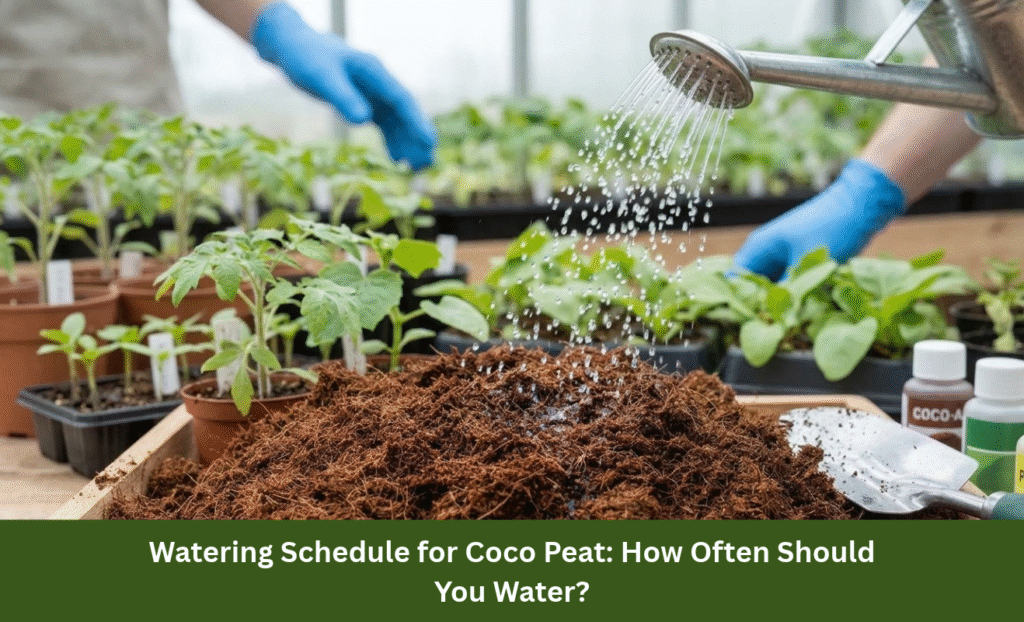
Watering schedule for coco peat is one of the most important things to get right when growing in coco coir. Because coco holds water differently from soil, using the wrong frequency can quickly lead to overwatering or underwatering and affect root health.
Here’s a practical guide to watering coco peat correctly.
Why Coco Peat Needs a Different Watering Approach
Coco peat holds a lot of water while still allowing good airflow to the roots. This means:
- It stays moist longer than many soils
- It can still drain well if the structure is good
- It performs best with frequent, lighter irrigations rather than heavy, infrequent watering
The goal is to keep the medium evenly moist — never completely dry and never waterlogged.
Watering Schedule for Coco Peat: Key Guidelines
There is no single schedule that works for every situation, but these principles apply to most growers:
- Water when the top layer of coco begins to feel slightly dry
- Aim for 10–20% runoff each time you water (especially in pots and grow bags)
- In warm conditions or under strong light, you may need to water once or more per day
- In cooler or low-light conditions, watering every 1–2 days may be enough
Smaller pots dry out faster than larger ones. Grow bags and slabs usually need more frequent irrigation than big containers.
Factors That Affect How Often You Should Water
Several things change the ideal watering frequency:
1. Plant Size and Stage
Young seedlings need less water. Mature, fast-growing plants drink much more.
2. Container Size
Small pots dry out quickly. Larger pots or grow bags hold moisture longer.
3. Temperature and Humidity
Hot, dry conditions increase water use. Cool, humid conditions slow it down.
4. Light Intensity
Higher light levels increase transpiration and water demand.
5. Type of Coco
Finer coco peat holds more water. Blends with coco chips drain faster and may need more frequent watering.
Best Practices for Watering Coco Peat
- Use drip irrigation when possible for consistency
- Water thoroughly until you see some runoff
- Avoid letting the coco dry out completely between waterings
- Check moisture by lifting pots or feeling the medium
- Monitor runoff EC and pH regularly
- Adjust frequency based on weather and plant response
Many commercial growers prefer frequent smaller irrigations rather than one heavy watering. This keeps oxygen levels higher in the root zone and reduces the risk of salt buildup.
Signs You Are Overwatering or Underwatering
Overwatering signs:
- Yellowing lower leaves
- Slow growth
- Soft or browning roots
- Fungus gnats
Underwatering signs:
- Wilting during the day
- Dry, light pots
- Leaf edges turning crispy
- Slowed growth
Learning to read both the plants and the medium is more reliable than following a fixed timetable.
Watering in Different Systems
- Pots and containers: Check daily. Water when the top feels dry and the pot feels lighter.
- Grow bags and slabs: Usually need daily or multiple irrigations, especially in warm weather.
- Hydroponic systems: Follow a programmed schedule based on light, temperature, and crop stage.
Quality of Coco Affects Watering Behaviour
Well-processed, consistent coco peat makes watering easier because it holds moisture evenly and drains predictably. Poor-quality or uneven coco can create dry pockets or stay too wet in places.
Manufacturers such as NB Coir produce coco peat and grow bags designed for reliable water retention and aeration, which helps growers maintain a more stable watering routine.
Final Thoughts
There is no universal watering schedule for coco peat, but the principle is clear: keep the medium evenly moist with good drainage and regular runoff.
Start by checking the coco daily, water thoroughly when needed, and adjust according to plant size, weather, and container type. With a bit of observation, most growers quickly develop a reliable routine that keeps roots healthy and plants growing strongly.